


Hexout - Color Hexa Puzzle
4.9937.00 Reviews
App Specs
- Version
- 0.0.43
- Updated On
- License
- Free
- Downloads
- 100,000+
- Developer
- Metajoy
- Categories
- Puzzle
- Platform
- Android
Screenshots



 Analysis by AppCompare
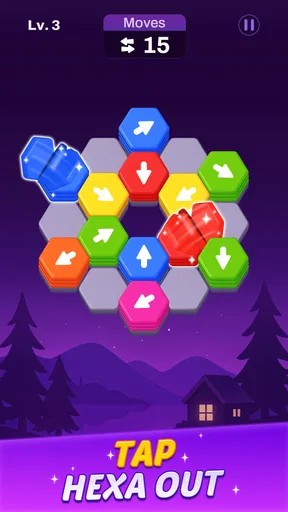
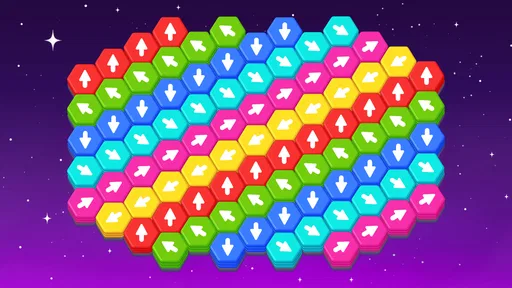
I tend to trust puzzle games that explain themselves quickly, then give me enough room to improve without burying the basic idea under menus and distractions. Hexout - Color Hexa Puzzle takes that direct approach: I tap colored hexagon tiles and work out which ones can move away by following the arrows. It is a small, focused challenge, but the combination of color recognition, spatial planning, and move order gives each board more thought than the simple presentation first suggests.
After spending time with it, I see the game as a good fit for short sessions rather than a large, story-driven mobile experience. It is free, rated for Everyone, and developed by Metajoy. The game belongs firmly in the puzzle category, with a clear emphasis on solving the board in front of you instead of collecting characters, managing resources, or following a narrative. That narrow focus is both its main strength and its biggest limitation.
How the first puzzles establish a goal
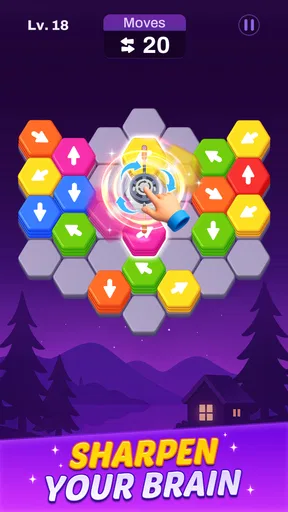
The opening idea is easy to understand. Hexagonal tiles fill the board, arrows indicate the direction in which a tile can leave, and I need to tap tiles in an order that does not leave the remaining pieces blocked. The color element adds another layer to the visual reading, so I am not merely checking an arrow; I am also scanning the arrangement and deciding which tile deserves attention first.
That makes the early goal pleasantly concrete. I am not trying to earn a vague score or complete a long checklist. I am trying to clear the current formation. The immediate objective gives the game a useful rhythm: inspect, predict, tap, and reassess. When the first move works, the board changes in a way that helps me understand the rules. When it does not, the mistake usually points back to a planning error rather than an unclear control.
The controls suit the concept. Tapping is more comfortable here than dragging would be, because the real task is choosing the correct piece, not physically moving it. I can play with one hand during a short break, though I still need enough attention to read the arrows and see which tiles overlap or obstruct one another. It is not a game I would describe as mindless, even when a board looks simple.
One useful habit is to avoid tapping the first tile that appears to have an open route. I get better results by tracing the arrow mentally and checking whether another hexagon occupies that path. A tile that looks ready may depend on a neighboring piece leaving first. This small pause turns the game from quick tapping into a compact logic exercise, and it is the first non-obvious lesson the design teaches.
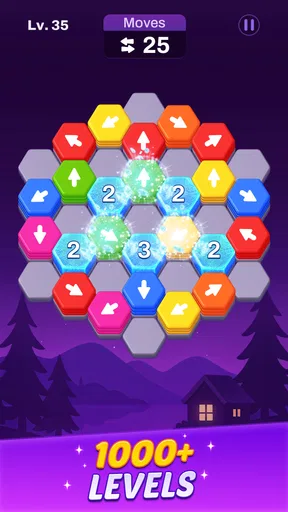
The color treatment also affects how quickly I read a board. Color helps separate pieces, but it can become part of the visual workload when several nearby tiles have similar tones. I found it more reliable to use color as a grouping clue while treating the arrows and physical arrangement as the final authority. Players who prefer very plain, number-based puzzles may find the visual mixture slightly busier than expected.
Worth Reading Before You Choose

Baby Panda World Brings Quick Play to Modern Phones, but Its Game Library Feels Busy

ESPN’s Live Game View Makes Following Close Games Easier

QuizzLand Review: A Good Fit for Short Trivia Breaks, Not Every Player

Basketball Stars: Multiplayer Is Fast, but Can It Recover When Matches Go Wrong?

WEBTOON Turns Phone Updates Into a Better Reading Routine

Link to Windows Runs on Shared Habits, Not Social Feeds
Why the early goals work
The early boards appear to be doing an important job beyond simply being easy. They establish a repeatable process: look for obvious exits, identify the pieces that block them, and delay moves that could close off useful routes. That process gives me something to improve immediately. I am learning to read the board rather than waiting for the game to tell me what to do.
This is also where the game feels most welcoming for younger players or anyone who normally avoids puzzle apps. The age rating is Everyone, and the central interaction does not require fast reflexes or complicated instructions. A child can understand the tapping goal, while an adult can still appreciate the planning involved once the layout becomes less forgiving.
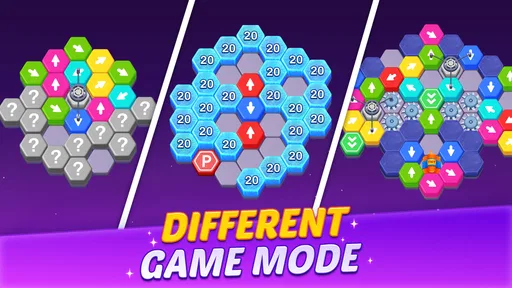
There is a trade-off, though. Because the core rule is so compact, players who expect several puzzle modes, a story, or a broad set of mechanics may decide that the experience feels limited. Hexout is not trying to be a huge toolbox of brain games. Its early promise comes from refining one idea, not from constantly introducing new ones.
How progress becomes visible without a complicated system
In a game like this, progress is not only about reaching a later board. I notice it in the way I begin to recognize patterns. At first I inspect each hexagon separately. With practice, I start seeing chains: one tile must leave before another can move, and that second move may expose a third route. The board becomes a small dependency map rather than a pile of colored shapes.
That change in perception is the most satisfying progress signal I found. The game does not need a long explanation to show that I am improving. I can tell because I spend less time making random attempts and more time predicting the result of a sequence. Clearing a difficult arrangement feels earned when I have planned the order correctly, even though the input itself is only a tap.
A practical approach is to divide the board into three groups: pieces with an apparently open exit, pieces whose path is blocked, and pieces that seem to control access to several others. I start with the first group only when the move cannot interfere with the third. This avoids a common mistake: clearing a convenient tile and discovering that I have removed the visual reference needed to understand the rest of the layout.
Another helpful technique is to look beyond the next move. I ask myself what the board will look like after a tile disappears, not simply whether that tile can leave now. This matters because a legal move is not automatically a good move. The strongest solutions usually come from preserving options and removing a piece that unlocks multiple future choices.
That distinction gives the game more depth than its store summary suggests. The challenge is not just matching a color or following an arrow. It is deciding whether immediate progress will create a better position. For players who enjoy compact logic problems, that is a meaningful strength. For players who want constant rewards or visible collection milestones, the progress may feel too subtle.
What the difficulty curve asks from the player
The difficulty feels most effective when it increases the number of relationships I need to track rather than simply making the board look crowded. A straightforward arrangement lets me practice reading directions. A more involved one asks me to remember which exit becomes available after a neighboring tile is removed. That is a fair way to raise the challenge because the rules remain stable while my planning burden grows.
The best way to handle a harder board is to slow down before the first tap. I scan every arrow, identify the pieces that have no obvious obstruction, and then search for a tile that is acting like a gate. If I find one, I consider whether removing it opens several routes or merely creates a new dead end. This approach is more dependable than solving from the outside inward every time.
There is also a useful distinction between a mistake caused by poor observation and one caused by committing too early. If I misread an arrow, I need to inspect the board more carefully. If I saw the route correctly but chose a move that blocked the next stage, I need to think in sequences. Recognizing which kind of error I made helps me improve instead of repeating the same tap pattern.
The game is not ideal for someone looking for a fast reaction challenge. The tension comes from anticipation, not a countdown or rapid input. That makes it suitable for a quiet commute, a waiting room, or a few minutes before bed, provided I want to concentrate. It is less suitable when I need something that can be played while my attention is divided between several tasks.
It is also worth being realistic about the emotional curve. A puzzle can feel rewarding when I solve it, but a blocked board may become frustrating if I have already made several irreversible choices. I prefer to treat failed attempts as information: the board has shown me which dependency I misunderstood. That mindset keeps the challenge constructive, although players who dislike restarting or retracing decisions may find the friction more noticeable.
Where the pacing keeps me playing
Hexout’s pacing comes from the size of its individual problem. I can begin a session with no preparation, understand the board quickly, and stop after a single solution. That makes it easier to return than a puzzle game that demands a long uninterrupted run. The short-session structure is especially useful when I want a mental reset rather than a large commitment.
At the same time, the game has to rely on the quality of its layouts to hold my attention. There is no need for me to invent a story around the pieces; the board itself must provide enough uncertainty to make the next decision interesting. When the arrangement creates a clear chain of dependencies, I feel pulled into solving it. When the answer seems obvious from the first glance, the experience becomes more like a quick exercise.
This is where the game differs from common alternatives in the puzzle category. Match-three games usually encourage rapid combinations and repeated movement, while word puzzles depend on vocabulary and recognition. A traditional sliding-block game often makes the player manipulate space directly. Here, the board is mainly about order: which hexagon should be tapped first so that the rest can follow. That makes it a better choice for players who enjoy sequencing than for players who want constant animation or score chasing.
Compared with a sudoku-style puzzle, the appeal is more visual and immediate. I do not need to fill a grid with symbols or maintain a long chain of written deductions. Compared with a minimalist color-matching game, however, Hexout asks for more spatial caution because the arrows and obstructions matter. The result sits between casual visual play and deliberate logic solving.
One of my favorite ways to use it is as a transition activity. If I have a few minutes between appointments, I can play one board and stop without losing the thread of a larger campaign. If I have more time, I can continue while paying attention to how my solving method changes. That flexibility is a genuine advantage over puzzle apps that are either too shallow for a longer session or too demanding for a brief one.
The same structure may not satisfy players who need a strong sense of long-term escalation. The game’s motivation is internal: I want to understand and clear the next arrangement. If I need character upgrades, a narrative reward, competitive rankings, or a collection to build, this focused format may feel sparse. I would choose a broader puzzle game in that case rather than expecting Hexout to provide a different kind of progression.
Small habits that improve the experience
I recommend playing with the screen brightness high enough to distinguish nearby tile colors, especially if the board contains several similar shades. I also try not to rush after a successful move. The disappearance of one hexagon can change the available routes, so the correct next action may be different from the move I planned before tapping.
When I reach an apparently impossible position, I review the last few choices in reverse order. Usually the problem is not the final blocked tile; it is an earlier move that consumed a useful route or removed the piece I needed as a reference. This backward check is faster than staring at the whole board and guessing again.
For a more relaxed session, I solve by identifying safe moves rather than searching immediately for the perfect sequence. For a more demanding session, I try to predict the complete order before touching the screen. The first method keeps the game approachable, while the second makes familiar layouts feel like a more serious logic test. That adjustable attitude helps the same basic mechanic serve different moods.
I would also avoid judging the game from a single easy board. Its value appears when I notice that a board can contain several apparently valid first taps but only some of them preserve a clean route. The decision-making is clearest when I stop treating every available move as equally useful.
What the current version means for a download decision
The current release is version 0.0.43, and the game runs on Android from version 8.0 onward. Those details make it accessible to many existing Android devices, while the free price removes the usual barrier to trying a short-form puzzle. I would still approach it as an early, focused experience rather than assuming it will replace every other puzzle app on my phone.
Its public response is encouraging: the game has a 4.9 average from around 20 thousand ratings and has passed 100 thousand installs. Those figures suggest that the simple concept is connecting with a substantial group of players, but I would not use popularity alone as the deciding factor. The more important question is whether you enjoy studying a board and choosing a safe order instead of reacting quickly.
For everyday use, I think it works best for commuters, students taking a short break, adults who want a low-pressure mental exercise, and families looking for an accessible puzzle that does not depend on a complicated fictional setting. The Everyone rating supports that broad accessibility, while the tap-based controls keep the learning curve gentle.
I would skip it if you mainly want a narrative adventure, a competitive leaderboard, a large variety of puzzle types, or a game that rewards speed above careful thought. I would also look elsewhere if visual color distinctions are difficult for you, because the colored hexagons are part of how the board communicates. The arrows remain important, but the visual arrangement is not incidental.
My final judgment is positive, with a clear qualification: the game succeeds by making move order interesting, not by offering a large amount of content around it. Metajoy has chosen a compact idea and built the experience around reading, prediction, and gradual improvement. When I want a quick puzzle that can occupy five quiet minutes or give me a more thoughtful session, it earns a place on my device.
It is not the right recommendation for every puzzle fan, and its narrow design may eventually feel repetitive to players who need constant novelty. For me, that restraint is mostly an advantage. I can open it, understand the objective immediately, and still find myself reconsidering a board because one careless tap changes the entire solution. If that kind of visual sequencing sounds satisfying, this free hexagon puzzle is worth trying.
Pros
- Simple rules make it easy to start playing immediately.
- Short levels are well suited to quick breaks.
- Color-matching gameplay feels satisfying when chains clear.
- Minimalist presentation keeps the board easy to read.
- Works well as a casual brain-training puzzle.
Cons
- Some stages can feel repetitive after extended play.
- Difficulty may increase abruptly in later puzzles.
- Small tiles can be difficult to distinguish on compact screens.
- Progress may feel slow for players seeking constant rewards.
- Requires careful planning
- which may frustrate casual players.
FAQs for Hexout - Color Hexa Puzzle
What is Hexout - Color Hexa Puzzle?
Hexout - Color Hexa Puzzle is a casual logic game built around arranging and matching colored hexagonal pieces. The main challenge is to place or clear tiles in the correct order while managing the limited space on the board. Its simple rules make it easy to start, but later puzzles require careful planning, color recognition, and a good understanding of how each move affects the remaining pieces.
How do you play Hexout - Color Hexa Puzzle?
Gameplay generally involves interacting with colored hexagonal tiles and organizing them so that matching colors can be connected, combined, or removed from the board. Before making a move, it is important to examine the available paths and think several steps ahead. A careless placement can block useful spaces, so success depends more on planning and observation than on fast reactions or complicated controls.
Is Hexout - Color Hexa Puzzle suitable for beginners?
Yes, Hexout - Color Hexa Puzzle is suitable for beginners because its controls are straightforward and the early stages introduce the basic mechanics gradually. You do not need previous puzzle-game experience to understand the objective. However, the difficulty increases as boards become more crowded and solutions become less obvious, giving experienced players enough challenge while keeping the opening levels accessible and relaxing.
Can Hexout - Color Hexa Puzzle be played offline?
Many puzzle sessions in Hexout - Color Hexa Puzzle can usually be enjoyed without a constant internet connection, which makes the game convenient for travel, waiting rooms, or short breaks. Nevertheless, certain features may depend on connectivity, including advertisements, cloud-related functions, updates, or promotional content. It is best to launch the game online at least once and check which options remain available offline on your device.
Does Hexout - Color Hexa Puzzle contain ads or in-app purchases?
Hexout - Color Hexa Puzzle may include advertising and optional in-app purchases, as is common with free-to-download mobile puzzle games. Ads can potentially appear between levels or when using extra assistance, while purchases may offer benefits such as removing advertisements, providing hints, or unlocking additional content. Before downloading, review the store listing and your device’s purchase settings, especially if children may play the game.


